
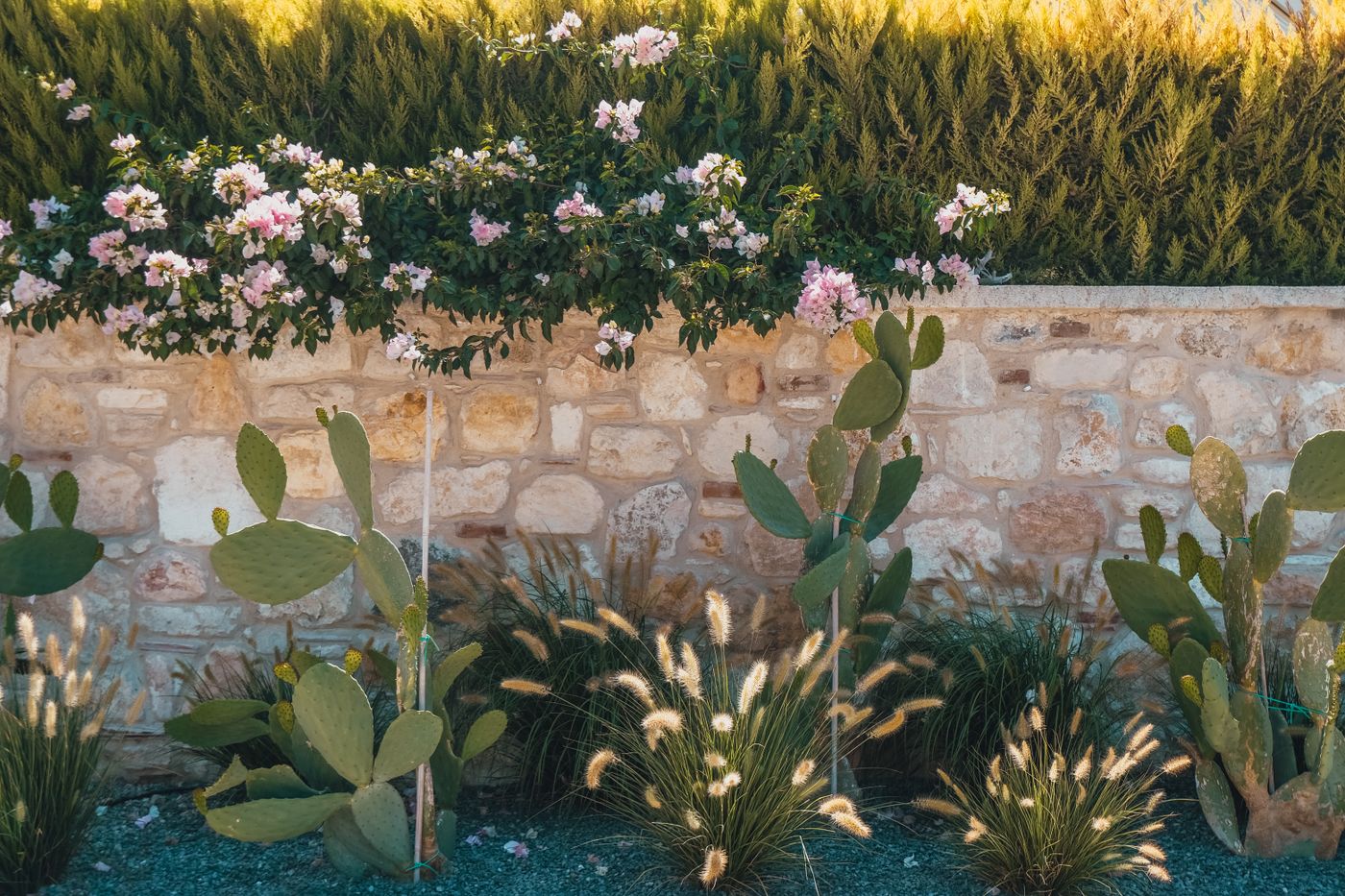
Evaluate the faces people will see
Wall stone is experienced through its exposed face, top, corners, joints, and shadow lines. Decide which sides of the wall will be visible and whether the design calls for a cap or coping. Compare several pieces rather than one sample, looking at face height, length, depth, color range, edge character, and how consistently the material can form the intended pattern.
Ask to see current material outdoors when possible. Photograph adjacent brick, siding, paving, and existing stone in daylight. A compatible selection may repeat a color or texture without matching every element. Tell the supplier whether the desired layout is orderly, ledged, blocky, or deliberately mixed so they can discuss suitable options.
If the wall will hold back soil, start with our guide to a natural stone retaining wall.
To carry the wall look onto the house, compare thin stone veneer with full bed stone.
Our guide to stone veneer colors shows how to read a color range against brick and siding.
Give the estimator the whole geometry
A wall’s length and height are only the beginning. Mark corners, curves, ends, steps, openings, columns, returns, changing heights, caps, and every exposed face. A double-sided freestanding wall differs from a wall with one visible face. Stone selected for corners or caps may be sold separately or require additional sorting and cutting.
Provide a dimensioned sketch and site photos to the installer. For any retaining function, the qualified designer or installer should establish the wall system and calculate materials after assessing the site. Do not use a generic coverage figure from another stone or wall type. Depth, piece dimensions, pattern, joints, cuts, and selection can all change the needed quantity.
Confirm units and responsibilities
Ask the seller whether the material is priced by weight, pallet, area, piece, or another unit, and what that unit includes. Request a clear explanation of how the selected product is commonly estimated, while having the installer own the final project quantity. Discuss an appropriate allowance for cuts, breakage, variation, and future repairs based on the actual design.
Before ordering, verify the product description, estimated amount, packaging, current-lot variation, separate corner or cap material, delivery fees, taxes, and return conditions. Confirm access for the delivery vehicle and a staging area suitable for the installer. Keep one representative stone or the product label for later reference if the team agrees. Clear roles matter: the supplier describes the material and selling unit, while the project professional connects those facts to the approved design and site.
Put your ideas into practice
Landscape & Retaining Walls
Explore wall materials with a clear understanding of appearance, function and site requirements.
Explore the project guide →Explore your materials
Stone for your project
There are no matched stone listings available here right now. Explore the catalog and confirm the material's suitability for your project with the quarry.
Keep exploring

Walls & Landscaping
Planning Access and Placement for Landscape Boulders
Document the route, staging area, utilities, slopes, and final orientation before a landscape boulder arrives.
Read the guideWalls & Landscaping
Selecting Landscape Boulders as Natural Accents
Choose boulders by purpose, scale, shape, color, viewing angle, and their relationship to plants and nearby hardscape.
Read the guideWalls & Landscaping
Decorative or Retaining Wall? Define the Project First
Learn why a wall’s purpose, grade, and site conditions should be settled before choosing landscape stone.
Read the guide