
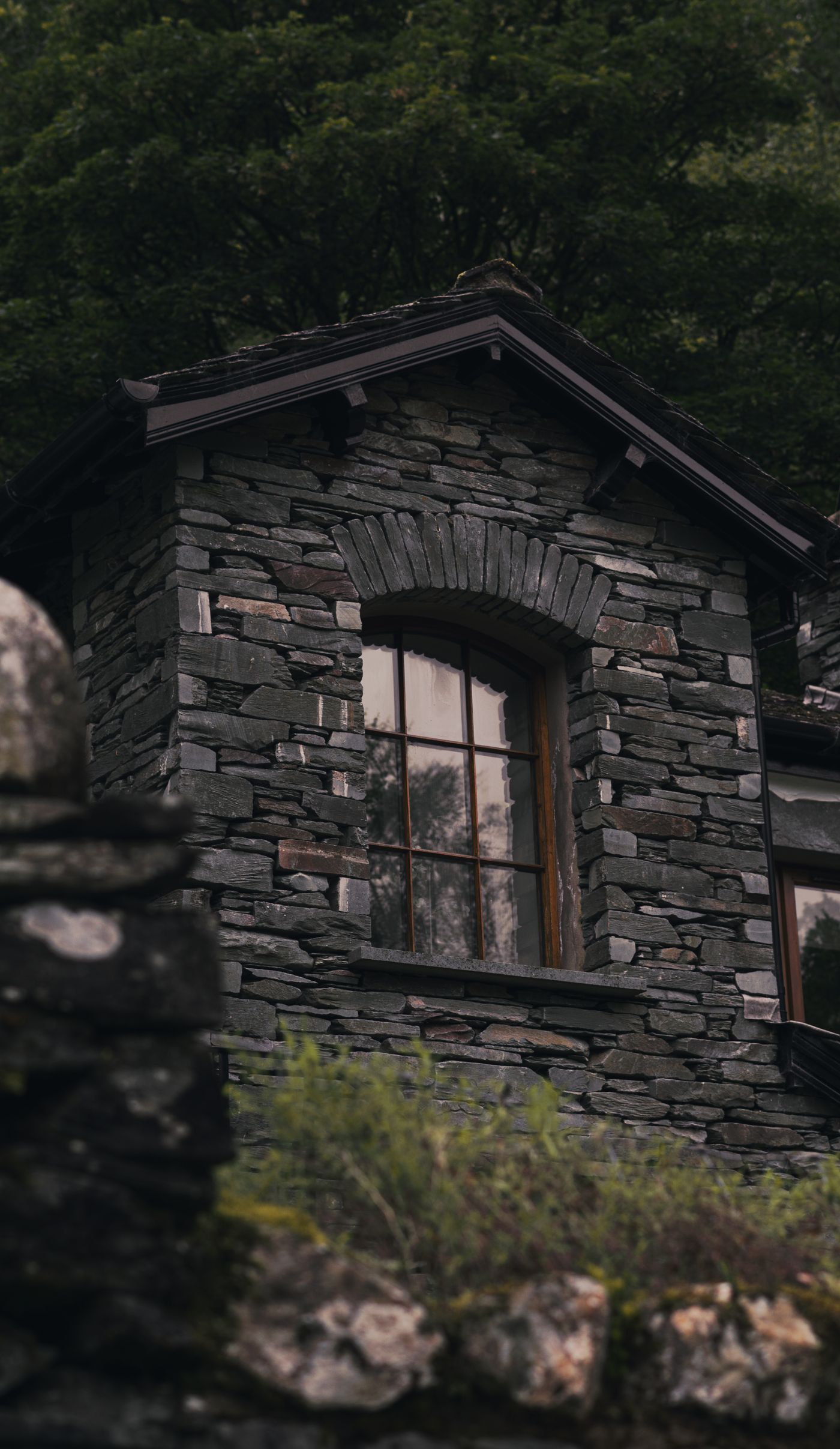
Collect the finishes that already lead the design
Begin with fixed elements that are unlikely to change: roof, brick, window frames, permanent paving, and major structural finishes. Add siding, paint, and trim samples if those choices are settled. Photograph the building in morning and afternoon light, because undertones and contrast can shift across the day.
Decide whether the veneer should quietly support the palette or become a focal point. A calm scheme may repeat one dominant undertone with limited contrast. A more expressive scheme can use broader color movement or stronger texture, but it still needs a clear relationship to the architecture. Write the goal in a sentence to guide comparisons.
If you have not picked a format yet, compare thin stone veneer with full bed stone first.
Judge a range, not one hand sample
Natural stone varies from piece to piece. Ask to see multiple pieces, a larger display, or current inventory so you can understand the range of light, dark, warm, cool, and patterned faces. Confirm how much variation is normal and whether selective blending is expected during installation. A small sample can suggest a palette, but it cannot represent every finished wall.
Texture changes how light creates shadows. Split, weathered, smooth, ledged, and irregular faces can make the same color family feel very different. Also compare piece size and shape. Large blocky pieces create a different scale from narrow ledges or a mixed mosaic, especially around windows, doors, and small columns.
Include joints, corners, and transitions
Mortar color, joint width, joint profile, pattern, and stone blending all contribute to the final appearance. Ask your installer for a sample panel or mockup when the project warrants it, using the intended stone mix and joint treatment. Review it at the site and under typical lighting before broad installation proceeds.
Map every location where veneer meets siding, brick, trim, roofing, paving, or another stone. Ask the designer and installer how those transitions and outside corners will be detailed, and ask the supplier about coordinating corner pieces, caps, or sills. Confirm the current lot, selling units, quantity estimate, and delivery plan. Save the approved sample-panel photos with notes about lighting and mortar so later decisions use the same reference. A coordinated veneer choice comes from evaluating the entire wall composition rather than chasing an exact color match from a photograph.
Put your ideas into practice
Stone Veneer & Home Exteriors
Add natural texture to your home with stone selected for its appearance and the wall assembly behind it.
Explore the project guide →Explore your materials
Stone for your project
There are no matched stone listings available here right now. Explore the catalog and confirm the material's suitability for your project with the quarry.