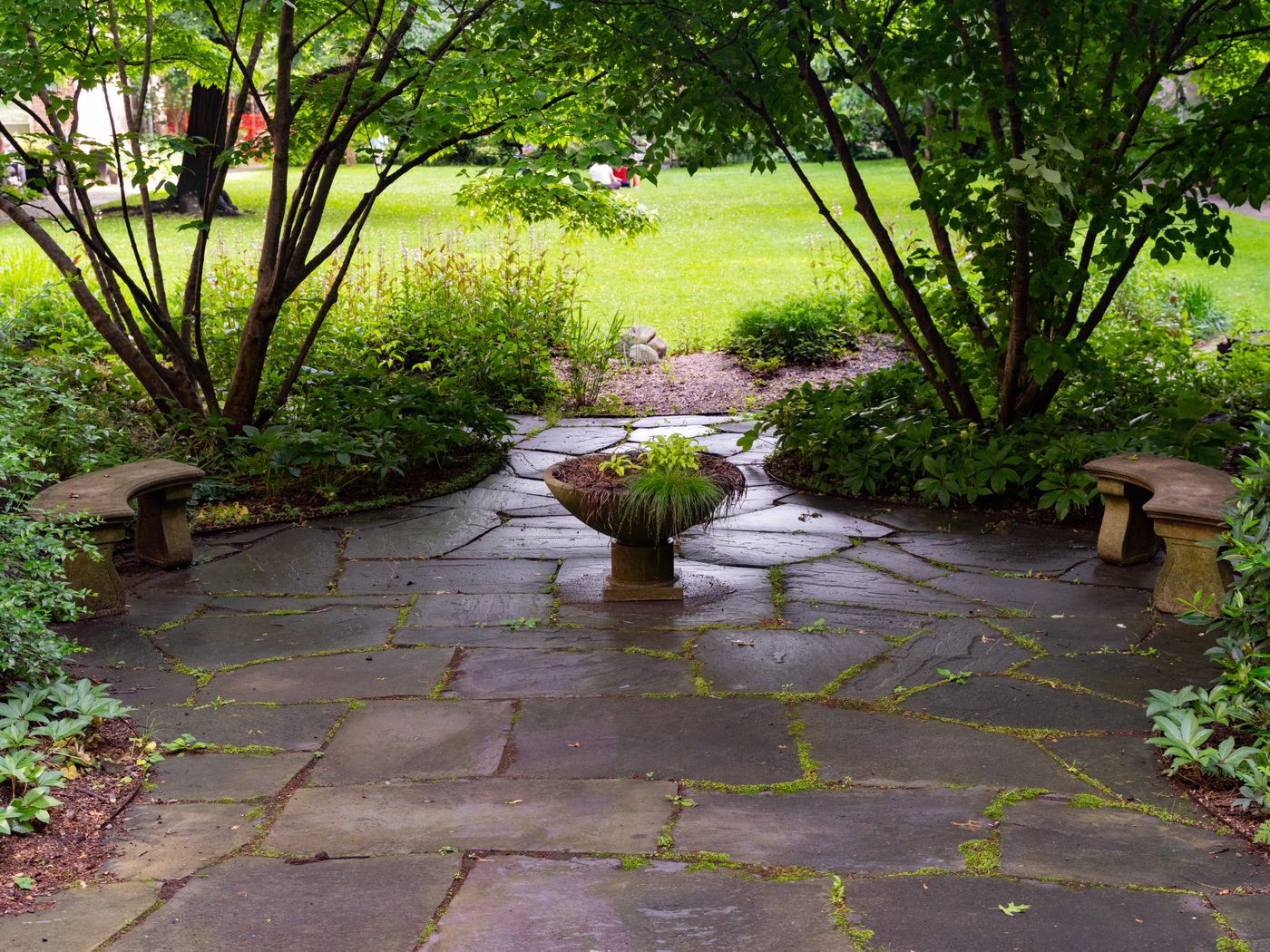
A bluestone patio gives you a flat, blue gray stone floor outdoors that suits a dining table as well as a quiet garden seat. Most bluestone is a dense, fine-grained sandstone from quarries in Pennsylvania and New York. It splits along its natural layers into even slabs, and builders have used it as a paving stone for decades.
What makes bluestone a strong patio stone
Bluestone has a tightly bound grain, and that density helps it stand up to weather. In freeze and thaw climates, water soaks into soft stone and freezes, and the ice pushes flakes off the surface. Dense stones such as bluestone stand up best to that cycle. The natural face also gives good grip underfoot.
The color range covers shades of blue, gray, brown and purple. A full color mix adds lilac and rust tones to the blue gray, and every piece varies a little from the next. In Australia the word bluestone means basalt, a different rock. Check the stone type on each listing you compare.
Ask the quarry to show several pieces from the current lot, because natural stone varies from piece to piece. View them outdoors in more than one light, and wet one piece to see the darker tone the stone takes after rain. If you are still weighing bluestone against other stone, our guide on how to choose flagstone for a patio compares each type by how it splits and wears.
Thermal or natural cleft bluestone
The finish shapes how the patio looks and how a chair stands on it. Bluestone comes in four common finishes: natural cleft, thermal, bush-hammered and tumbled.
Natural cleft is the face the stone shows when it splits along its natural bedding plane. A natural cleft face is layered and uneven, and it grips well on a wet patio or walkway. Pick the flattest pieces for a dining area, because the small ridges on a cleft face can rock a chair leg.
Thermal bluestone gets its face from a high temperature flame passed over the surface. The flame leaves an even, matte texture with high grip when wet. A thermal face stays flatter under a table, and many buyers choose it for a formal patio of cut pieces or for a pool deck.
A toothed hammer head strikes bush-hammered bluestone and leaves a pitted face with good grip, and buyers often choose it for pool decks. Tumbling softens the edges of tumbled bluestone and gives it a worn, rustic look that suits a garden path.
Pattern, irregular or slab bluestone
Next, choose the shape of the pieces. Pattern bluestone has sawn edges in squares and rectangles, and it goes down in a pattern with tight joints. Cut bluestone pavers often come 1 inch or 1.5 inches thick, and a single supplier may offer ten sizes or more. Some suppliers sell pattern sets with labels such as Pattern A and Pattern B. Ask the quarry for the size of every piece in a set, because you need those sizes to plan the layout and the order.
Irregular bluestone flagging keeps the broken edges from the split. The installer fits the pieces like a puzzle with wider joints, and the patio takes on an organic look that suits a garden or a fire pit area. Irregular flagging also comes in thermal and tumbled finishes, and a thermal piece pairs a flat face with a natural outline.
Bluestone also comes in large slabs and in treads and coping for steps and walls. Order the treads and coping from the patio stone's quarry, and your steps will match the field of stone. Some patios mix two shapes, with a cut border around an irregular field.
Thickness and the way the patio goes down
Bluestone patios go down one of two ways, and the method sets the thickness you need.
- Dry laid: the stone rests on a compacted base with a sand bed, and the joints fill with joint sand or polymeric sand. Pieces for this method typically measure 1.5 to 2.5 inches thick, because thinner pieces can crack or rock under a table leg.
- Mortar set: the stone bonds with mortar to a concrete slab. Thinner bluestone of about half an inch to 1 inch works here, because the slab supports the weight.
Thicker stone stands up better to impact. A bluestone driveway needs thicker pieces and a well built base, because vehicle loads can crack thin stone.
For a dry laid patio, a common paver method digs out at least 6 inches of soil. It adds the base in 2 inch layers and compacts each layer before the next one goes in. A 1 inch sand bed goes on top, and the whole patio slopes a quarter inch per foot away from the house so rain drains off. Edge restraints go around every open side. Your installer sets the final base depth for your soil and your frost line.
Plan time to set each piece by hand, because natural stone takes extra care to align and level.
How much bluestone to order
Start with a sketch that shows real dimensions, and split the patio into rectangles. Multiply the length by the width of each rectangle, then add the results to get your square feet. Subtract any area that gets no stone, such as a planting bed.
Quarries sell bluestone by the ton, by the pallet, by the square foot or by the piece. Each listing shows its unit beside the offer, along with the minimum order, and you work out your amount in that unit. Our guide to how natural stone is sold explains each unit in detail.
- By the square foot: order your measured area plus the extra for cuts.
- By the piece: multiply the length by the width of one piece in inches and divide by 144 to get its square feet. A 24 by 24 inch paver covers 4 square feet, so you divide your area by 4.
- By the ton: divide your square feet by the area one ton covers at your thickness. Stone 1 to 1.5 inches thick lays about 100 to 150 square feet per ton. Stone 1.5 to 2 inches thick lays about 80 to 120.
- By the pallet: divide your square feet by the square feet on one pallet, then round up to a full pallet.
Dense stone lays fewer square feet per ton than lighter stone at the same thickness, so ask the quarry for its own figure. Then add extra for cuts and sorting. Cut pattern stone usually needs about 5 to 10 percent more, and irregular flagging needs about 10 to 15 percent because the installer trims more pieces. That extra also leaves you a few spares for repairs in later years.
Bluestone is a type of flagstone, so our flagstone calculator gives a first estimate in tons from your area and thickness. Our guide to planning flagstone patio coverage shows a full worked example from sketch to order.
Care for a bluestone patio over the years
Bluestone absorbs some water, and over time it can take up stains. A sealer helps the stone resist stains, and the usual advice for a bluestone patio is to seal it. Ask the quarry which sealer suits its stone.
Check shaded and damp corners for moss or algae, and clean those spots when you see growth. The stone can turn slippery in heavy rain or on ice, and a thermal or bush-hammered face keeps high grip when wet near a pool or a door. Dark bluestone also warms up in full sun, and bare feet feel the difference around a pool.
A piece can chip or crack under a hard blow. Lift the broken piece and set one of your spares in its place. Spares from the first order match the patio best, because natural stone varies from lot to lot.
Order bluestone direct from the quarry
Quarries list their stone on Rock Bottom Stone, and you order direct from the quarry that fits the job. Quarries add their stone to the bluestone category of the marketplace, and each listing shows the unit it sells by.
Stone is heavy, and a quarry near your job keeps the haul short. Bring your square feet and your thickness, then request a quote for the bluestone your patio needs.
Explore your materials
Stone for your project
There are no matched stone listings available here right now. Explore the catalog and confirm the material's suitability for your project with the quarry.
Keep exploring
Patios & Walkways
How to Choose Flagstone for a Patio
Choose flagstone for your patio by how each stone splits and wears. Match the thickness to the way the patio goes down, then order direct from a quarry.
Read the guidePatios & Walkways
Planning Flagstone Coverage Before You Buy
Turn your patio sketch into a flagstone order. Learn what a ton of flagstone lays at each thickness and how much extra to add for cuts, with a worked example.
Read the guide
Patios & Walkways
Continuous or Spaced Stone Walkway: Which Fits Your Yard?
Pick a stepping stone path or a solid walkway by how people use the route. Space the stones to a real stride, and choose stone thick enough to stay put in lawn.
Read the guide